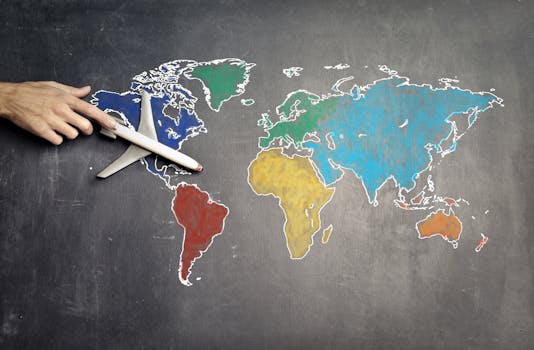
The Nomad’s Guide: Exploring the World's Most Remote Places
Traveling to the farthest corners of the globe has never been more enticing—or more possible. For the adventurous at heart, remote destinations offer a rare chance to escape the crowds, disconnect from the digital world, and experience untouched cultures and landscapes. From windswept arctic tundras to desolate island atolls, venturing into the world’s most isolated regions is a journey of both challenge and awe. This comprehensive guide examines the allure of remote travel, spotlights some of the planet’s least accessible places, and equips modern nomads with the essential knowledge to make their far-flung dreams a reality.
What Makes a Place Truly Remote?
Remoteness isn’t just about distance. It’s a blend of inaccessibility, sparse populations, limited infrastructure, and sometimes even political barriers. According to the World Bank, about 14% of the global population lives in remote rural areas, often with fewer than 10 people per square mile. The United Nations defines "remote" as locations more than 50 km from the nearest urban center or major road.
Key characteristics of remote places: - Limited transportation options (often requiring multiple flights, boats, or off-road vehicles) - Minimal or non-existent healthcare and communication infrastructure - Extreme climates or geographical barriers, such as mountains, deserts, or polar ice - Indigenous cultures or small, isolated communitiesThese factors combine to create the unique appeal—and challenge—of remote travel. For nomads, it’s not just about escaping civilization, but experiencing a way of life that’s profoundly different from the familiar.
Top Remote Destinations: Where Few Have Roamed
The world is filled with destinations that defy easy access. Here are some of the most remote places that have captivated intrepid explorers:
1. $1 Known as the most remote inhabited island in the world, Tristan da Cunha lies 2,400 km from the nearest continent (Africa). Its population of about 250 people is accessible only by a seven-day boat journey from South Africa, with just a handful of annual departures. 2. $1 Dubbed the coldest inhabited place on Earth, Oymyakon’s temperatures plunge to -67.7°C (-89.9°F). Reaching this Siberian village requires a multi-day drive along the "Road of Bones," a perilous route through frozen wilderness. 3. $1 Home to the descendants of the HMS Bounty mutineers, Pitcairn has fewer than 50 residents. Access involves a flight to Tahiti, a ferry to Mangareva, and a 32-hour boat ride across open ocean. 4. $1 While not as isolated as others, the Faroe Islands’ capital is surrounded by dramatic North Atlantic seas. The island chain is reachable via limited flights or ferry from Denmark, and offers untouched landscapes and authentic Nordic culture. 5. $1 One of Greenland’s most isolated towns, Ittoqqortoormiit is locked in by sea ice eight months a year. Access is possible by helicopter from Iceland and then by boat or snowmobile.Here’s a comparative overview of a few of these destinations:
| Destination | Population | Main Access Method | Average Annual Visitors | Unique Challenge |
|---|---|---|---|---|
| Tristan da Cunha | ~250 | 7-day boat ride | Less than 300 | No airport, infrequent ships |
| Pitcairn Islands | ~50 | Multi-leg boat journey | About 50-100 | Extreme isolation, supply delays |
| Oymyakon | ~500 | Long overland drive | Under 1000 | Extreme cold, limited roads |
| Ittoqqortoormiit | ~350 | Helicopter + boat/snowmobile | Approx. 500 | Sea ice, limited flights |
Planning Your Remote Adventure: Essential Considerations
Traveling to remote places requires careful planning, flexibility, and an appetite for the unexpected. Here’s what all aspiring remote nomads need to consider:
1. $1 Many remote areas require special permits due to conservation efforts or indigenous land rights. For example, visiting Bhutan’s rural east requires a government-issued guide, and access to the Galápagos Islands is regulated to protect wildlife. 2. $1 With limited medical facilities, travelers must be self-sufficient. The Centers for Disease Control and Prevention (CDC) recommends carrying a comprehensive first-aid kit, essential medications, and emergency evacuation insurance for journeys into isolated regions. 3. $1 Don’t expect Wi-Fi. Satellite phones, GPS trackers, and offline navigation tools are crucial. In 2023, only 12% of the globe’s most remote areas had reliable mobile phone coverage, according to the International Telecommunication Union. 4. $1 Remote environments are often ecologically fragile. Stick to the "leave no trace" principle, minimize plastic use, and respect local regulations. Participation in conservation projects or community-based tourism can help offset your impact. 5. $1 Pack for self-reliance: food, water purification, extreme weather gear, and backup power sources. Transport options may be limited to a single weekly flight or monthly boat, so flexibility in scheduling is vital.Cultural Encounters: Respect and Learning in Far-Off Lands
Remote travel is as much about human connection as it is about solitude. Many of the world’s isolated locations are home to indigenous peoples with unique languages, traditions, and worldviews. In Papua New Guinea, for example, over 800 languages are spoken among small, dispersed communities. In Namibia’s Kaokoland, the Himba people have preserved semi-nomadic lifestyles for centuries.
Guidelines for meaningful and respectful cultural exchange: - $1 in the local language, even if only greetings and thanks. - $1 before taking photographs or entering sacred sites. - $1 with humility—sharing meals, joining festivals, or learning crafts can foster genuine understanding. - $1 by choosing homestays, guides, and craftspeople.Travelers become informal ambassadors, influencing how outsiders are perceived for years to come. The goal is not just observation, but mutual respect and learning.
Overcoming the Challenges: Stories from the Edge
Remote travel is not without its hurdles. Delayed transport, unpredictable weather, and cultural misunderstandings are par for the course. Yet, these challenges often become the most memorable parts of the journey.
- In 2019, a group of trekkers bound for Nepal’s Upper Mustang region found their plans upended by a sudden landslide. Rather than being stranded, they were welcomed by a local family, experiencing village life and age-old Buddhist rituals. - Solo cyclist Emily Chappell recounted needing to wait two weeks for the next supply ship on St. Helena, giving her unexpected time to explore the island’s history and forge friendships with residents. - Wildlife photographer Paul Nicklen described days without food in Canada’s Arctic while waiting for a narwhal migration, but also called it “the most beautiful, transformative experience” of his life.Flexibility, patience, and openness to the unknown are essential. Remote destinations reward those who can adapt and embrace the adventure’s unpredictability.
The Transformative Power of Remote Exploration
Why venture so far off the grid? For many, remote travel is a form of personal transformation. A 2022 survey by Adventure Travel Trade Association found that 67% of travelers seeking remote destinations did so for spiritual or personal renewal, rather than sightseeing alone.
Benefits of exploring the world’s most isolated places include: - $1 Encountering radically different ways of life challenges assumptions and broadens horizons. - $1 The absence of digital distractions fosters deeper presence and reflection. - $1 Witnessing untouched ecosystems firsthand inspires a stronger commitment to conservation.In a world increasingly connected and crowded, remote places offer true rarity: silence, space, and mystery. For the nomadic spirit, these are the greatest treasures of all.