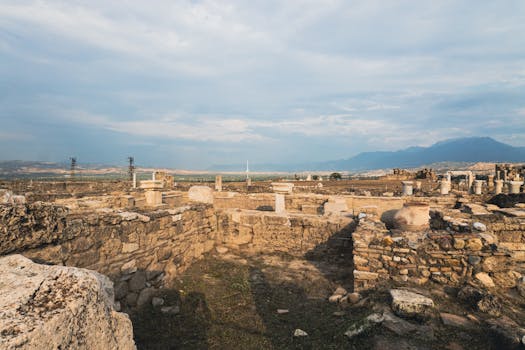
Exploring ancient ruins not only sparks the imagination but also connects us to the human stories and civilizations that shaped today's world. Whether you are drawn to the intricate artistry of temples or the strategic complexities of ancient cities, these sites serve as a powerful reminder of humanity’s enduring ingenuity and spirit. Here are some additional ancient ruins to consider for your next historical adventure:
The Acropolis, Greece Perched above the city of Athens, the Acropolis is a symbol of classical spirit and civilization, featuring several buildings of great architectural and historic significance. The most famous among them is the Parthenon, a temple dedicated to the goddess Athena, whom the people of Athens considered their patron. Visiting early in the morning will help you avoid the crowds and the heat of midday. Be sure to spend some time in the Acropolis Museum for a deeper understanding of the artifacts found at the site.
Teotihuacan, Mexico Located just outside of Mexico City, the ancient city of Teotihuacan is one of the most architecturally significant Mesoamerican sites, known for its large pyramidal structures, such as the Temple of the Sun and the Temple of the Moon. The site offers a chance to see the impressive Avenue of the Dead and numerous beautifully preserved murals. Visiting during the week can help you avoid the larger weekend crowds.
Stonehenge, United Kingdom This prehistoric monument in Wiltshire, England, is one of the most famous sites in the world. Archaeologists believe it was constructed from 3000 BC to 2000 BC. The ring of standing stones is set within a dense complex of Neolithic and Bronze Age monuments, making it a significant focus for archaeological study. Special access tours allow you to visit the inner circle of stones, otherwise seen from a distance due to preservation efforts.
Pompeii, Italy Once a thriving and sophisticated Roman city, Pompeii was buried under meters of ash and pumice after the catastrophic eruption of Mt. Vesuvius in 79 A.D. The site near Naples provides an extraordinarily detailed insight into the life of a city at the height of the Roman Empire. In Pompeii, you can walk down ancient streets to see the remains of bakeries, brothels, and baths, making it easier to imagine the daily lives of Romans.
Chichen Itza, Mexico This large pre-Columbian archaeological site was built by the Maya civilization and is located in the Yucatan Peninsula. The site contains many fine stone buildings in various states of preservation, and many have been restored. The Pyramid of Kukulcan at Chichen Itza, known as El Castillo, is famous for the phenomenon that occurs twice each year, during the spring and autumn equinoxes, when the shadow of the serpent god Kukulcan is seen to descend the steps of the pyramid.
Visitor Tips for Exploring Historical Sites
- Plan Your Visit: Some sites can be very crowded, especially during peak tourist seasons. Check if you need to book your tickets in advance.
- Capture Memories, Respectfully: While photography is allowed at most sites, the use of flash is often prohibited, and in some areas, cameras may not be allowed at all.
- Use Audio Guides: Many historical sites offer audio guides that provide valuable insights and stories to enhance your visit.
- Support Local Communities: Consider buying souvenirs from local artisans or eating at local restaurants to help support the communities that preserve these historical sites.
Visiting these ancient ruins allows you to connect with history in a direct, personal way, offering insights not only into the past but also into the shifting dynamics of the present and future of civilizations. Each site, with its unique narrative and aesthetic, is a portal to a bygone era, waiting to be explored and appreciated by modern adventurers.